Blog: Dr Guillaume Spirals
Copyright © David Boettcher 2005 - 2026 all rights reserved.First published: 3 August 2024, last updated 25 June 2025.
I make additions and corrections to this web site frequently but, because they are buried somewhere on one of the pages, the changes are not very noticeable. I decided to create this blog to highlight new material.
The article in this blog is from a series explaining how temperature compensation is achieved in modern watches without bimetallic compensation balances. This is achieved by using an unusual property of nickel steel alloys to make balance springs that, unlike steel springs, get stiffer as their temperature increases.
The breakthrough occurred in 1897, with the invention by Paul Perret and Dr Guillaume of the first nickel steel compensating balance springs. The development of nickel steel balance springs began with these first Paul Perret balance springs, leading to Elinvar, and ultimately to Nivarox in the 1930s.
Six articles in this series are currently planned;
- The Discovery of Invar,
- Paul Perret Balance Springs,
- Dr Guillaume Spirals,
- Elinvar balance springs,
- Variable Rate Balances and
- Nivarox balance springs.
The highlighted links will jump straight to the ones that have been published.
The articles are from the page about Temperature Compensation by Nickel Steels.
As always, if you have any comments or questions, please don't hesitate to get in touch via my Contact Me page.
Dr Guillaume Balance Springs

Figure 1 Dr Guillaume balance spring in my grandfather's Rolex watch movement: Click image to enlarge
The first nickel steel balance springs sold under the name of Paul Perret were a revolution in temperature compensation. For the first time, errors in timekeeping caused by changes of temperature were compensated by the properties of the materials of the balance and spring, with no need for an expensive and delicate compensation balance.
However, the nickel steel alloy of the first Paul Perret springs had a relatively low elastic limit or yield strength, the point at which it stops behaving elastically and starts to permanently deform. This made the springs delicate, they could easily be deformed during handling when being initially fitted to the watch or during servicing. The alloy also had high internal friction, which caused damping of the balance oscillations.
After Paul Perret died in 1904, the rights to his balance spring patents were acquired by the Société des Fabriques de Spiraux Réunies, a company that had been formed in on 17 December 1895 by the merger of the five main Swiss balance spring manufacturers: Georges Sandoz, Charles Dufaux and Guye & Cie in Geneva, Baehni & Cie in Bienne and J. Huguenin-Girard in La Chaux-de-Fonds. The board was composed of the directors of these companies: Georges Sandoz, Charles Dufaux, Philippe-Auguste Guye and Jules Huguenin.
To improve the properties of the material used for nickel steel balance springs, experiments were made with adding alloying elements. For Guillaume and Pierre Chevenard, the metallurgist at the Imphy steelworks, the challenge was to increase its yield strength without affecting its thermoelastic characteristics, which gave balance springs their thermal compensation properties.
In line with the usual practice at the time, only small amounts of alloying elements were used. In the 1880s, it was found that adding 3% nickel to steel produced an alloy that was exceptionally strong and tough, beating all others at a famous trial in 1890 at the US Naval Ordnance Proving Ground in Annapolis, Maryland. This led to the widespread use of nickel steel armour for battleships, in artillery pieces such as the French 75mm field gun, and to Guillaume's discovery of Invar.
Adding small amounts of alloying elements has little effect on the modulus of elasticity of a material, but can significantly increase its yield strength. This manifests itself as an increase in hardness. This traditional method of alloying is called solution hardening, because the alloying elements are soluble in the main element at all temperatures. It works by atoms of the alloying elements taking up substitutional or interstitial positions within the crystal lattice, introducing local strains that impede the movement of dislocations. Copper alloyed with tin results in bronze, which is much harder than copper and gave rise the bronze age. Silver alloyed with 7½% of copper results in sterling silver, long used for coins because of its durability compared to pure silver.
On 17 June 1912 and 1 July 1912 respectively, Dr Guillaume and Société des Fabriques de Spiraux Réunies were granted two Swiss patent, 54715 and 54876, both of which have the same priority date of 20 February 1911. The priority date is the date that the application was submitted which, if the patent is approved or “granted”, is the date from which the invention is protected under patent law.
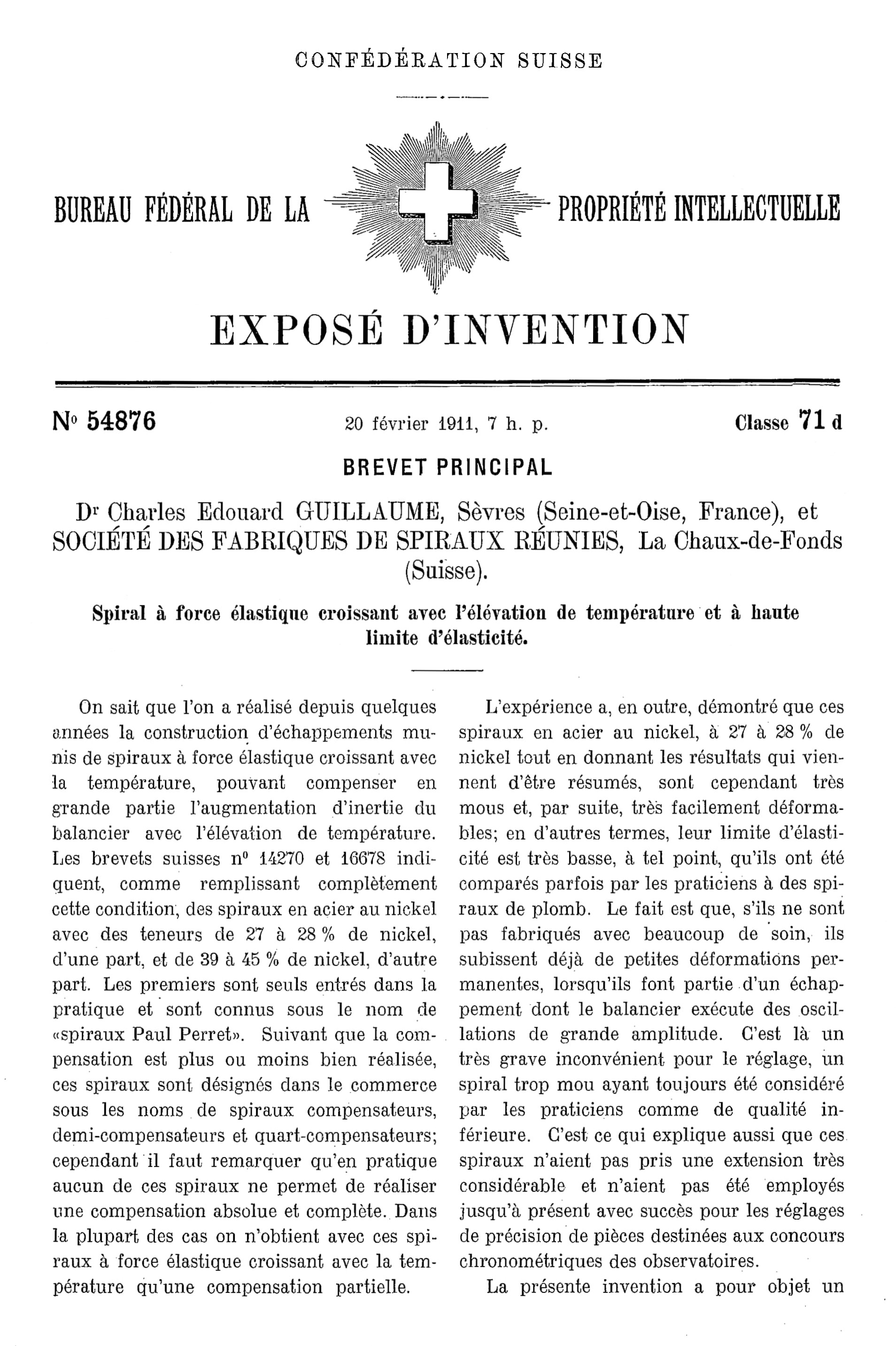
Figure 2 Swiss Patent 54876: Click image to enlarge
Patent 54715 is for an “Alliage à force élastique croissant avec la température et à haute limite d'élasticité”, or Alloy with elastic force increasing with temperature and high elastic limit. This was a patent for a nickel steel alloy with the property of its modulus of elasticity increasing with temperature, the same thermoelastic characteristic as the alloy of Paul Perret balance springs, but with a higher elastic limit.
Patent 54876 is for a “Spiral à force élastique croissant avec l'élévation de température et à haute limite d'élasticité”, or balance spring with elastic force increasing with increasing temperature and high elastic limit. This is essentially the same material as patent 54715, but with specific application to balance springs.
The statement that the “elastic force” of the spring increases with temperature is a poor expression. The “elastic force” of a balance spring, if it is taken to mean the restoring torque or couple that the spring exerts on the balance, depends on the angle of rotation of the balance. It varies as the balance swings, from zero at the neutral position to a maximum at the limits of the balance excursion. To compensate for thermal expansion of a balance monometallic balance, it is the stiffness of the balance spring that must increase as the temperature increases so that at any given angle of rotation of the balance, the restoring force is greater at a higher temperature to compensate for the increased moment of inertia of the balance due to its thermal expansion.
The increasing stiffness of the balance spring with increasing temperature is partially a result of a positive thermoelastic coefficient, meaning that its modulus of elasticity increases as the temperature rises, making it stiffer and less elastic. The increase in the modulus of elasticity and thermal expansion of the spring, particularly its thickness, produces an increase in the spring's stiffness that compensates for thermal expansion of the balance.
The new material was a nickel steel alloy containing 27-30.5% nickel, but with the addition of at least four of the elements carbon, chromium, manganese, molybdenum, silicon, tantalum, titanium, tungsten and vanadium. The proportion of each of these additional elements was between 0.2 and 4%, and their total amount in the alloy amounted to between 3.5% and 10%. The patent does not specify the exact amounts of the alloying elements; the objective was to secure protection of the invention without giving precise details that competitors could copy.
Balance springs made from this material were said to have an elastic limit comparable to that of hardened and tempered carbon steel springs, but that was rather an exaggeration. However, they are harder than the earlier simple binary nickel steel alloy of Paul Perret balance springs.
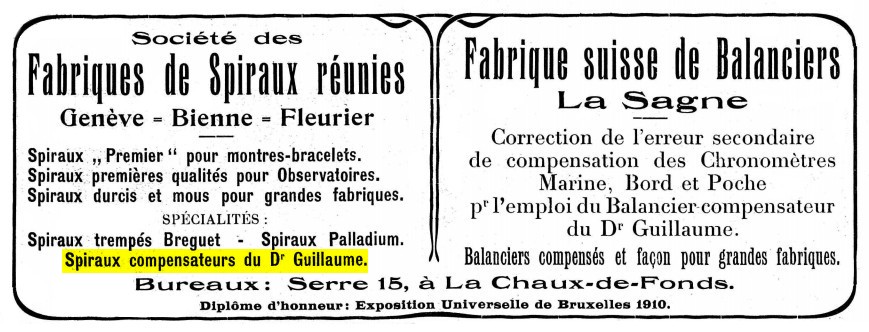
Figure 3 Advert for Dr Guillaume balance springs - Spiraux compensators du Dr Guillaume: Click image to enlarge
Balance springs made from the new alloy superseded Paul Perret springs and were called “spiraux Guillaume” (Guillaume spirals, or Guillaume balance springs). Figure 2 shows in the left half an advert by Fabriques de Spiraux Reunies from 1914 which lists ‘Spiraux compensators du Dr Guillaume’ (compensation balance springs of Dr Guillaume).
Within the same advert in the right half is a notice by Fabrique Suisse de Balanciers of La Sagne about correction of secondary errors (middle temperature error) in marine chronometers, deck (‘bord’) watches, and pocket watches by use of Dr Guillaume compensation balances.
My grandfather's wristwatch was made around 1918 and, as can be seen in Figure 1, it has a nickel steel balance spring. Given the date of manufacture, this must be a “Dr Guillaume spiral”. At first glance, the balance looks like a bimetallic compensation balance, which is puzzling.
Nickel steel balance springs needed no temperature compensation so, at the time this watch was made, were usually fitted with monometallic balances of brass or Maillechort. However, the balance of my grandfather's watch is clearly bimetallic, with steel arms and inner rim and brass outer rim. This looks like a compensation balance and there are cuts in the rims in the places where a compensation balance would usually be cut through. However, the these cuts do not go all the way through the rim, which means that sections of the rim cannot curl inwards or outwards in response to changes in temperature. This is therefore not a compensation balance, even though it looks like one.
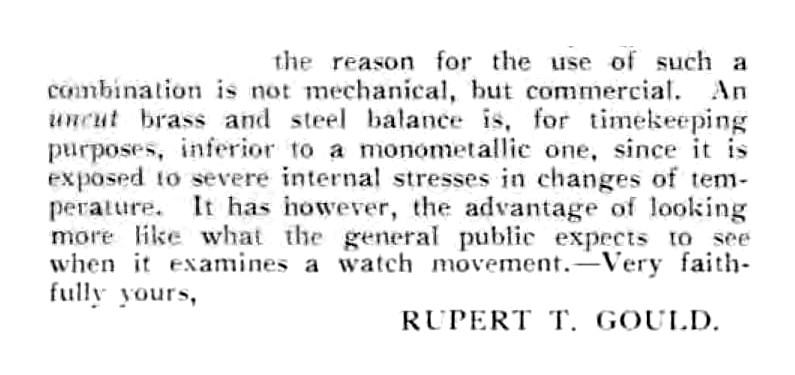
Figure 4 Horological Journal August 1924: Click image to enlarge
A nickel steel compensation spring not only makes a compensation balance unnecessary; fitting one would produce the undesired effect of the watch running faster as the temperature increased. This explains why the rims of this balance are not cut through, which prevents it from functioning as a compensation balance. So why was a bimetallic balance fitted at all?
The explanation was given by Rupert Gould in a letter to the Horological Journal as shown in Figure 4. It was because people expected to see a compensation balance in a high quality watch, so a balance was fitted that looked like a compensation balance but didn't behave like one.
The advertisement shown in Figure 3 includes “Balanciers compensés et façon ...” It appears that balanciers façon compensés was the term used for uncut bimetallic balances that looked like compensation balances.
If you have any comments or questions, please don't hesitate to get in touch via my Contact Me page.
Copyright © David Boettcher 2005 - 2026 all rights reserved. This page updated June 2025.
Back to the top of the page.