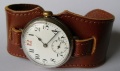
Dimier Brothers & Co
Copyright © David Boettcher 2005 - 2026 all rights reserved.In La Montre Chinoise (Geneve-Paris 1983), Alfred Chapuis writes,
Jean Antoine Dimier (1795-1863) founded Dimier & Cie. in Geneva in the early 19th century. Later records show that around 1835 the company had its premises at Rue Croix d’Or 27, Geneva. Dimier & Cie specialized in miniature pocket watches in gold and enamel or gilt brass cases that were often decorated with floral enamel ornaments and pearls; the watches were usually intended for the Chinese market. As the Chinese customers usually preferred large and impressive watches, Dimier’s miniature timepieces were a rarity in their time.
Dimier’s sons Charles-Louis (1822-1896) and Auguste-Antoine (1824-1891) studied at the college of Geneva and trained as watchmakers in La Chaux-de-Fonds. Around 1846 they moved to Fleurier; Auguste worked as a watchmaker, his brother Charles was a sales director.
Charles moved to Canton around 1847 and established the company Dimier & Cie. Trading was discontinued in 1860, presumably because of the war in China. Charles eventually returned to Switzerland and in 1862 the two brothers moved the business from Fleurier to Geneva.
The war referred to by Chapuis was the Second Opium War, which began in 1856 and continued until 1860. In 1858, the Overland China Mail recorded that Dimier Brothers & Co had appointed Theodore Kroes as a local agent able to sign contracts on behalf of the company, suggesting the company was pulling out then. Unfortunately, no addresses are given.
After relocating the business from Fleurier to Geneva with his brother, Charles Louis Dimier subsequently moved to London and established a company Dimier Brothers & Co. This company was first recorded in circa 1868 at 46, Cannon Street, London, listed as Swiss watch importers.
Official Swiss records of companies began to be published in 1883. On 15 February 1883 a notice stated that Charles Dimier, domiciled in London, Auguste Dimier, domiciled in Geneva, Georges Dimier and Edouard Dimier, both domiciled in London, all four from Geneva, had formed a general partnership in Geneva prior to 1 January 1 1883 under the name Dimier Fréres & Cie. Originally, only Charles Dimier and Auguste Dimier had the power of corporate signature. The type of business was stated to be a watchmaking factory. The address of the offices was given as 6 Rue Petitot, presumably the street now called Rue Jean-Petitot in the city centre. It was noted that the company had a branch office in London at 46, Cannon Street E.C. It was subsequently noted that the company had given power of attorney to Georges Dimier and Edouard (Edward) Dimier.
After Georges Dimier retired from the English company, Edouard, now called Edward, Dimier continued as sole partner until he was succeeded by Georges (Charles) Dimier, who was later joined by Amalia Dimier, presumably his wife. The company's Swiss addresses were given as 24 Rue Leopold Robert, La Chaux-de-Fonds, and then 111 Rue de de la Paix, La Chaux-de-Fonds.

1913 Dimier Brothers advert in Switzerland for English made leather watch straps
Dimier Frères & Cie registered the name “Selezi” as a trademark on 11 March 1912.
The company traded under the name George Dimier from the 1920s. In advertisements it was claimed that the company could trace its history back to 1795 in Geneva.
The British company was converted into a limited liability company on 10 December 1924.
At an Extraordinary General Meeting of Dimier Brothers & Co Ltd on 10 March 1971, a Special Resolution ‘That the Company be wound up voluntarily’ was passed.
Leather Watchstraps
The advertisement reproduced here is from a Swiss trade paper in 1913 for English made "bracelets cuir" for "montre bracelets", i.e. leather straps for wristwatches. These were made by Pearson & Sons in London and sold in Switzerland by Dimiers. You can read more about this at Early wristwatches.
Dimier Brothers Sponsor's Marks


The sponsor's mark DBs or DBs shown in the images here was registered at the London Assay Office by Dimier Brothers & Co., a large company importing Swiss watches into Britain in the nineteenth and early twentieth centuries, and also exporting to Switzerland leather straps made in England for wristwatches.
Dimier Brothers & Co. had offices in London and, under the name Dimier Fréres & Co., in la Chaux-de-Fonds. They had no manufacturing capability, they were purely an import / export company. Watches and watch movements imported by Dimier Brothers often carry the trademark DF&C within an oval.
Dimier Brothers played an important role at the beginning of the twentieth century in the introduction of the first men's wristwatches. They registered in Britain and Switzerland a design of curved fixed wire lugs to attach a leather strap to a watch case. They required Swiss watch manufacturers to pay a fee to use this design, which was shown by the Swiss registered design number 9846 being stamped in the back of the watch case as "Déposé No. 9846". You can read more about this at Déposé No. 9846.
Sponsor's Marks CD, ED
The trend of having Swiss made watch cases hallmarked in British assay offices caused Charles Dimier to enter three sponsor's marks “CD” in cameo within rectangular surrounds at the Chester Assay Office in February 1882 and April 1885 in the name of Dimier Brothers & Co, watch manufacturers and importers, 46 Cannon Street, London.
Three sponsor's marks “CD” in cameo within rectangular surrounds were entered at the Chester Assay Office in February 1882 and April 1885 by Dimier Brothers & Co, watch manufacturers and importers, 46 Cannon Street, London.
Charles Dimier entered the first sponsor's mark for Dimier Brothers & Co at the London Assay Office on 4 December 1878. A second mark "ED" was registered by Edward Dimier on 8 July 1884.
These marks were registered during the period between 1874 and 1887 when some Swiss watch cases were being stamped with British hallmarks. From 1 January 1888 new styles of combined marks, including prominently the word "Foreign", were introduced by Act of Parliament to be used by British assay offices for hallmarking imported watch cases. This effectively put a stop to foreign watch cases being marked with British hallmarks until 1907.
1907 Import Hallmarks
In 1906 the case of Goldsmiths vs. Wyatt resulted in an Appeal Court judgement that all imported gold and silver watch cases should be assayed and hallmarked in a British assay office, and the law was modified so that all gold and silver watches imported into Britain after 1 June 1907 were assayed and hallmarked in a British assay office, and marked with special hallmarks that were used only on imported items.
The sponsor's mark “G.D” was first registered with the London Assay Office by George Charles Dimier on 12 December 1906, less than two weeks after the judgement in the case of Goldsmiths vs. Wyatt. The Dimier Brothers company subsequently registered eight more "G.D" punches with the London Assay Office between March and December 1907, and five further "DBS" punches in 1907, the large number of punches gives an indication that they were importing large numbers of watches that all needed to be marked before being sent to be assayed and hallmarked.
Gold Cases
During the First World War, imports from Switzerland of watches in gold cases, or gold watch cases, were severely restricted by high import duties, and actually prohibited for the latter part of the war. After the war the import duties continued, making it economic to import bare watch movements and put them into English made gold cases.
In 1922 Dimier Brothers entered a number of sponsor's mark punches “DBS&Co” in cameo at the Birmingham Assay Office. These were the first marks they had entered in Birmingham, suggesting that they were using a Birmingham based watch case manufacturer to make cases, which were marked with Dimier's sponsor mark.
If you have any comments or questions, please don't hesitate to get in touch via my Contact Me page.
Copyright © David Boettcher 2005 - 2026 all rights reserved. This page updated September 2025.
Back to the top of the page.