Blog: The Hammer with Handle Mystery
Copyright © David Boettcher 2005 - 2026 all rights reserved.First published: 21 February 2025, last updated 26 January 2026.
I make additions and corrections to this web site frequently but, because they are buried somewhere on one of the pages, the changes are not very noticeable. I decided to create this blog to highlight new material.
Note that these articles also get updated, especially soon after they are posted when additional information may be added. Check the “last updated” date to see when the article was last updated.
The section below about the hammer with handle mystery is from the page about Swiss watch case maker's marks, Swiss Poinçons de Maître.
As always, if you have any comments or questions, please don't hesitate to get in touch via my Contact Me page.
PdM 2: Hammer with Handle
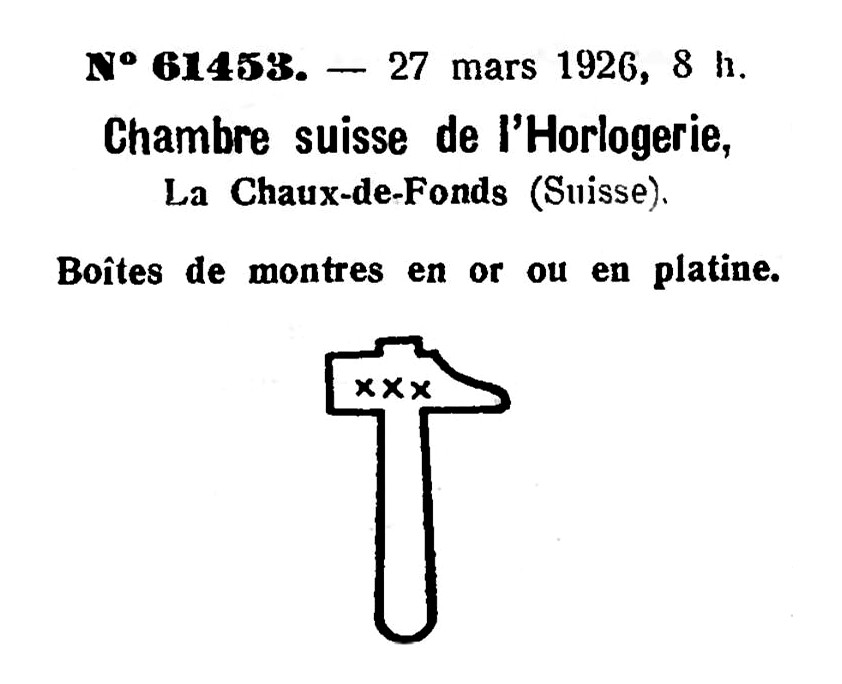
Figure 1. Registration of hammer with handle mark in March 1926: Click image to enlarge
The first Poinçon de Maître to be registered as a collective responsibility mark was a ‘marteau avec manche’ or hammer with handle shown in Figure 1. This was registered on 27 March 1926 by the Chambre suisse de l’Horlogerie based in La Chaux-de-Fonds. The registration says that the mark is for watch cases in gold or platinum.
Although it was the first such mark to be registered, in later documentation this mark is described as Poinçon de Maître collective No. 2.
The image of the registration of the hammer has three crosses on the hammer head. When the mark was struck on a case by a watch case manufacturer, these crosses were replaced by their registration number, enabling the identity of the case manufacturer to be traced without it being too obvious to watch purchasers.
Hammer with Handle Mystery

Hammer with Handle No. 321, thanks to Glenn.
The database of the Swiss Central Office of Precious Metal Control lists the hammer with handle as ‘Poinçon de maître collectif No. 2’. There are only two numbers listed under this mark in the records starting in 1934, No. 115 Favre & Perret SA, and No 160 Joseph Erard SA.
The hammer with handle mark was registered in 1926, so the presence of only two entries in the 1934 list, numbers 115 and 160, suggested that there must have been many other companies registered from 1926 onwards which do not appear in the 1934 list. I have a Stauffer & Co wristwatch with a 9 carat gold case that has Glasgow import hallmarks for 1926 / 1927. The case has a hammer with handle mark with the registration number 180.
I asked USH-APIC and the Swiss Central Office for Precious Metal Control about this, but they have no records prior to 1934. A description of the meaning and use of each of the marks supplied in 2011 by USH-APIC contains no reference to mark No. 2, the hammer with handle. Unfortunately this description is not dated, but must be later than 1958.
In an attempt to understand what had happened, in 2011 I asked for details of any cases seen with the hammer with handle mark. Over the years since, a lot of sightings have come in, including one with the registration number 321. It seems likely that, if this exercise was continued, all the registration numbers up to 312, and perhaps higher, missing from the 1934 list would be found.
This data shows that there were a large number of companies using this mark between 1926 and 1934, but that all but two had stopped using the mark before 1934. It is unlikely that more than 300 separate watch case manufacturers went out of business in the years between 1926 and 1934. It is clear that that a decision was taken some time in the 1920s or early 1930s to stop using the hammer with handle mark.
The reason for this is almost certainly explained by the second collective responsibility mark that was registered in 1926, which is described next.
PdM 1: Hammer Head

Figure 2. Registration of second collective responsibility mark, a hammer head, in June 1926: Click image to enlarge
Less than three months after the registration of the first mark, the hammer with handle, a second mark of a ‘marteau sans manche" or hammer without handle, that is a hammer head, was registered on 11 June 1926, as shown in Figure 2. The registration says that this mark is for watch cases in gold or platinum, the same as the hammer with handle.
The reason for this is not documented, but it seems likely that this was to provide a discreet alternative to the hammer with handle. The hammer with handle is easy to recognise. After a few months of its use, it may have been found that customers could see it in the cases of watches made by different manufacturers and thereby realise that the cases were all made by the same company, so a less easily recognisable mark was introduced.
The hammer head is referred to in official Swiss records as poinçon de maître collective number one, PdM No 1, and the hammer with handle as PdM No 2, but the dates of registration show that the order of registration was the other way round.
On 20 April 1934, ownership of the hammer with handle and the hammer head marks was transferred from the Chambre suisse de l’Horlogerie, La Chaux-de-Fonds, to the Fédération Suisse des Associations de Fabricants de Boites de Montres en Or (F. B.), rue de la Concorde 11a, Le Locle.
The data supplied in 2007 by the Swiss Central Office for Precious Metal Control states that the mark is to be used only on watch cases made of gold, platinum or palladium with a minimum thickness of 0.15 mm.
Hammer with Handle Mystery Solved
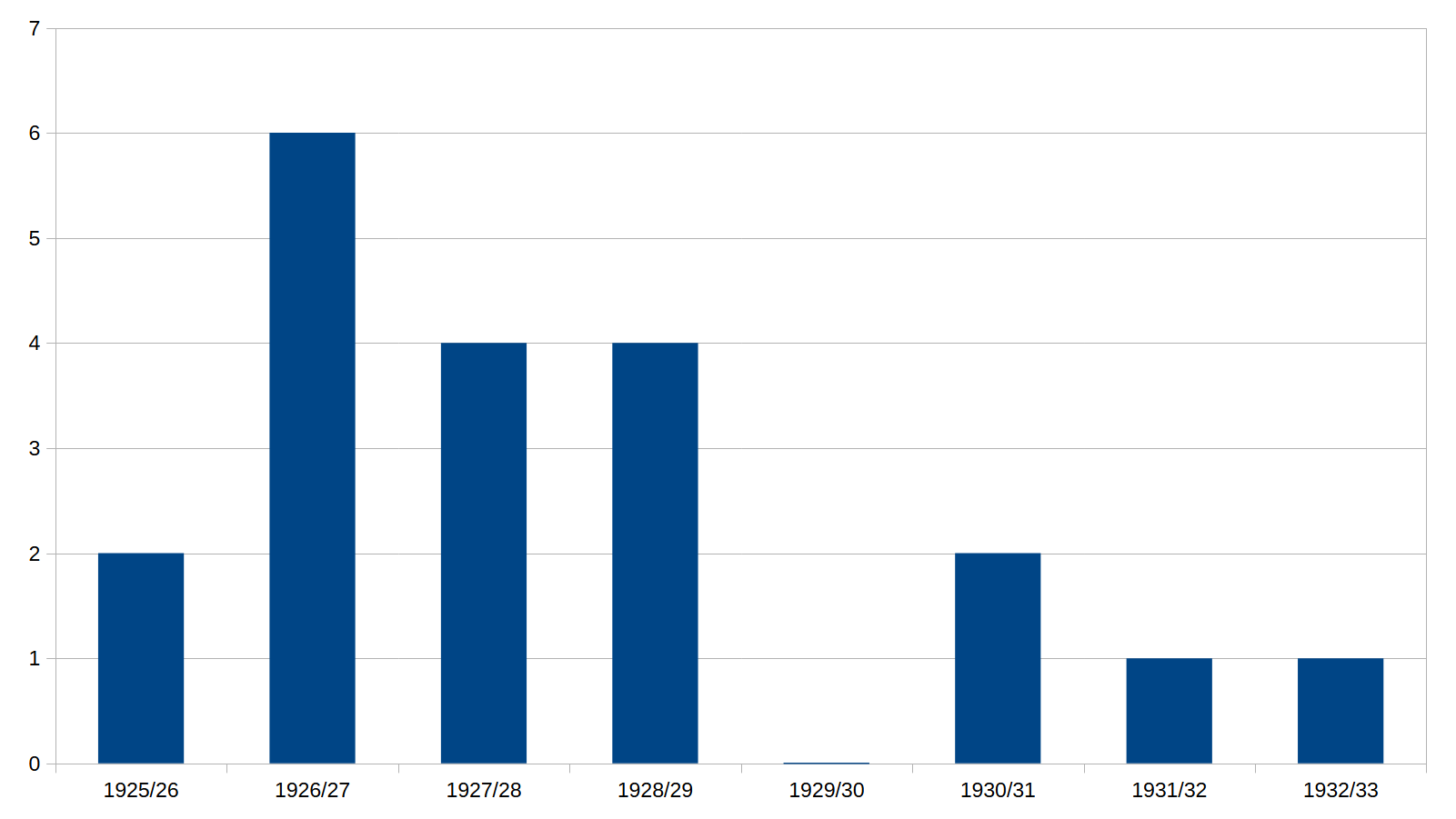
Hallmark dates of cases with PdM No. 2, the hammer with handle: Click image to enlarge
In the lists supplied by the Swiss Central Office for Precious Metal Control in 2007, there are a large number of registrations for PdM No. 1, the hammer head, dated 21 July 1934. The list of registrations for the hammer with handle contained only two, numbers 115 and 160, also both date 21 July 1934. This is the date of publication of the lists, the registrations actually took place on 11 July 1934, but that doesn't alter the point.
Because the two collective marks were registered in 1926, and there could not have been dozens of new companies all registering to use them on the same day in 1934, it seems clear that all the entries dated 21 July 1934 were transferred from an earlier list. The question is why were there so many on the hammer head list, but only two on the list for the hammer with handle?
When it is considered that the hammer with handle mark is the earlier of the two marks, it perhaps all companies that initially registered to use the hammer with handle mark also registered a few months later to use the hammer head mark. If the hammer head mark became the preferred mark, because of its more discreet appearance, then perhaps use of the hammer with handle declined to the point when in 1934, only two companies wished to continue using it.
The details of cases with the hammer with handle mark supplied to me by correspondents add 44 marks to the two known from the 2007 list and my own watch. These marks are all shown in the table for poinçon de maître No. 2. There are twenty cases with British import hallmarks, which enables their date of manufacture to be established. The data from these cases is shown in the figure and, although it's only a small sample, it supports the hypothesis that use of the hammer with handle mark declined between 1926 and 1934. Note that British hallmark dates spanned two calendar years. The two cases seen with hallmarks for 1925 to 1926 were hallmarked before the date letter was changed in 1926.
Could it be that companies who were initially registered with a number for the hammer with handle mark were given the same registration number for the hammer head mark? If the theory that the hammer with handle mark was quickly found to be too easy to recognise and the hammer head was registered as an alternative, then this seemed quite likely, and it turns out that this was exactly what happened.
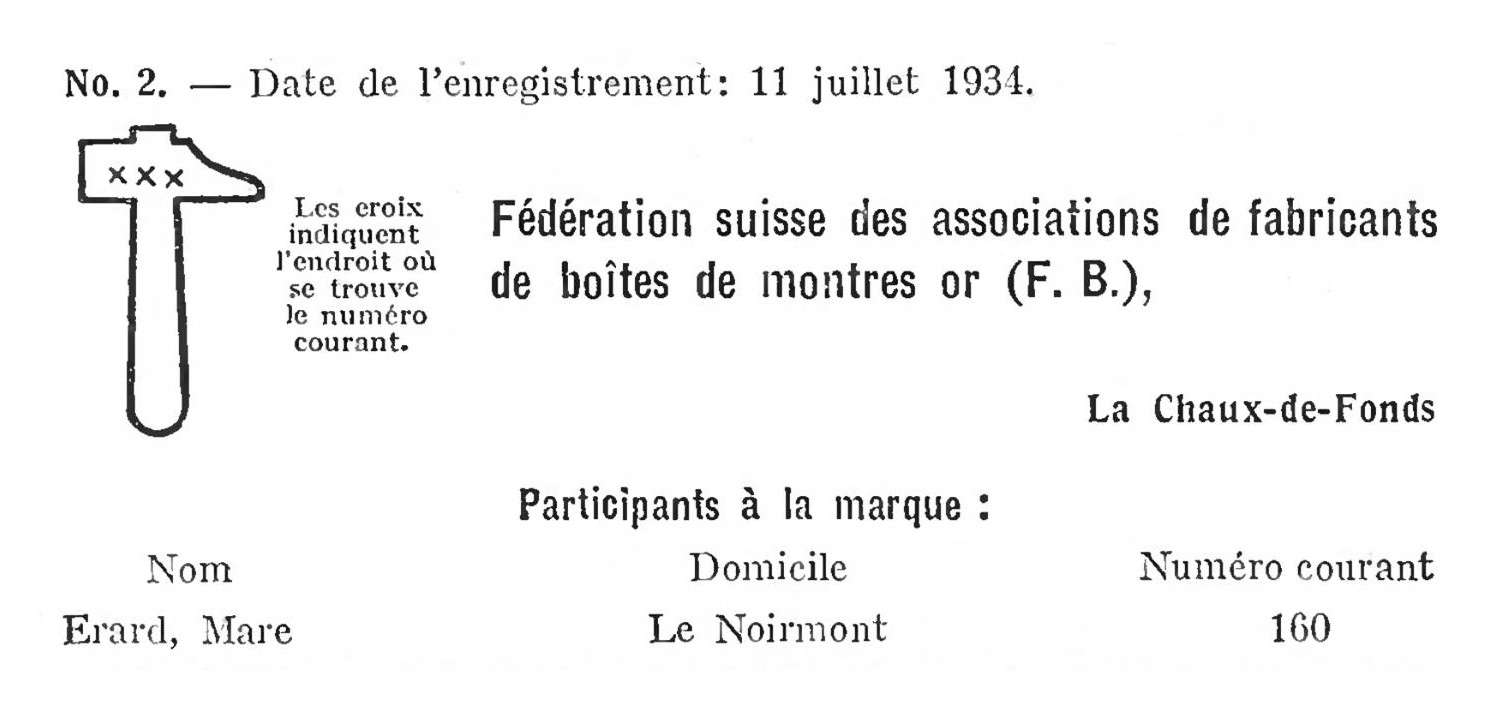
Marc Erard registration PdM No. 2/160 in 1934
Click image to enlarge
In the 2007 lists of PdM No. 1 and PdM No. 2, registration number 115 is listed as Manufacture Favre & Perret SA.
In the 2007 list of PdM No. 1, there is no record of registration number 160. Number 161 is listed as Joseph Erard SA, Le Noirmont. In the list of PdM No. 2, there is no record of number 161. Number 160 is listed as Joseph Erard SA, Le Noirmont. So it appears that Joseph Erard SA had registration number 161 in the list of PdM No. 1 and 160 in the list of PdM No. 2, which was long thought to be an argument against companies having the same registration number on both lists. However, research by Bernd Riemann brought to light that the PdM2 number 160 was in fact registered in 1934 to Marc Erard, not to Joseph Erard. This removes the conflict.
Another clue was provided by some early Rolex Oyster cases with the hammer with handle mark and registration number 136. In the list from 1934 of the registrants for the hammer head, number 136 is assigned to C. R. Spillmann. It is known that for the fist ten years, C. R. Spillmann was the exclusive manufacturer of Oyster cases for Rolex. Rolex Oyster cases are seen with both the hammer with handle and hammer head marks, each carrying number 136. This shows that C. R. Spillmann was registered to use both marks with the same number 136.
Does this mean that if you have a watch case with an unidentified hammer with handle mark you can simply look up the registrant in the 1934 hammer head list? Yes. In fact, the same thing happened in 1958 when PdM No. 6, the ‘ecusson’ or shield was registered, as discussed under the section about that mark.
If you have any comments or questions, please don't hesitate to get in touch via my Contact Me page.
Copyright © David Boettcher 2005 - 2026 all rights reserved. This page updated January 2026.
Back to the top of the page.