Blog: Invar Balances
Copyright © David Boettcher 2005 - 2026 all rights reserved.First published: 2 May 2024, last updated 26 November 2025.
I make additions and corrections to this web site frequently but, because they are buried somewhere on one of the pages, the changes are not very noticeable. I decided to create this blog to highlight new material.
The article below is part of the page about Temperature Effects.
As always, if you have any comments or questions, please don't hesitate to get in touch via my Contact Me page. I would be interested to get your feedback on this article, about how it reads and if there are any mistakes!
B. W. Raymond Invar Balances
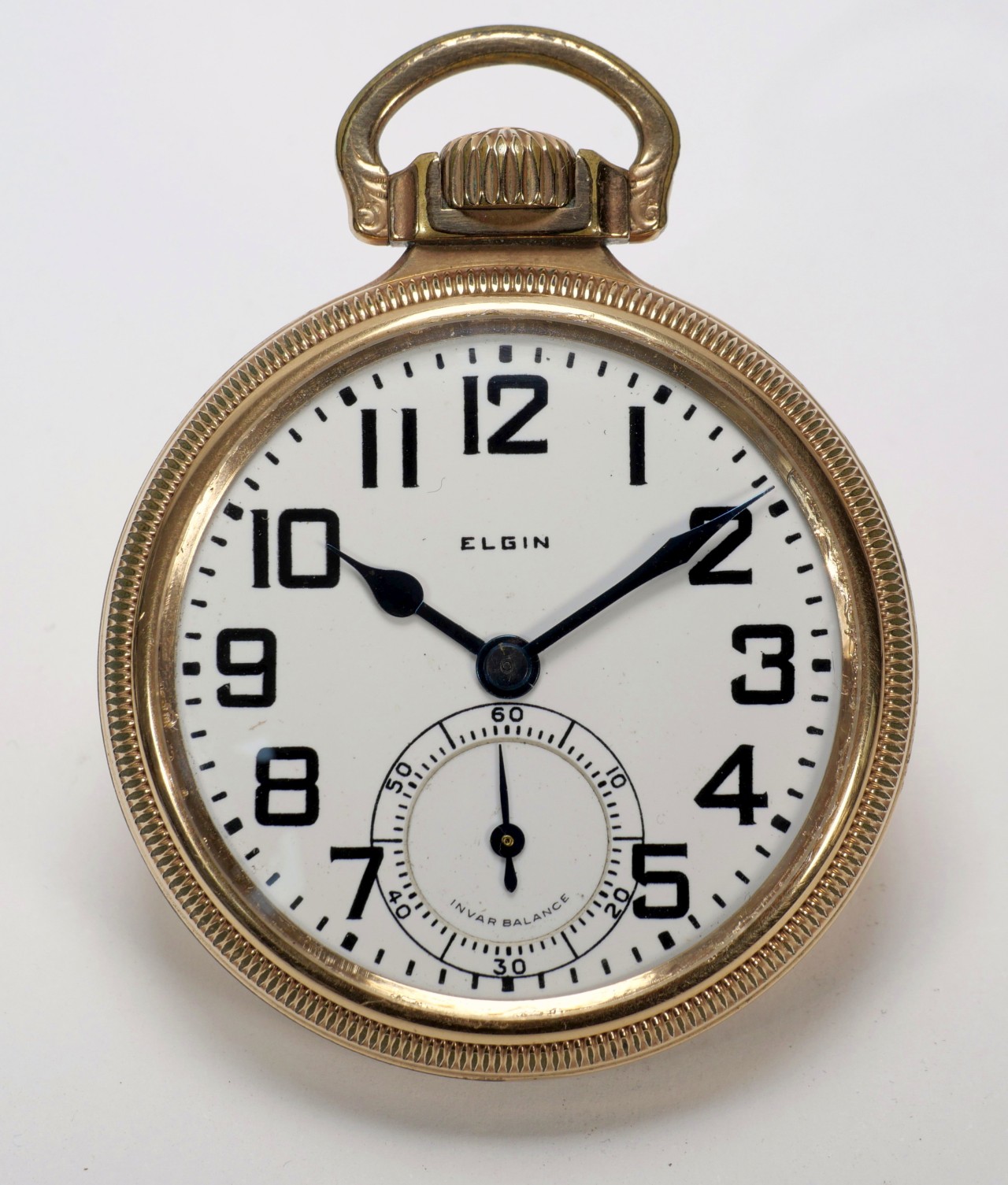
Elgin B W Raymond, “Invar” balance: Click image to enlarge
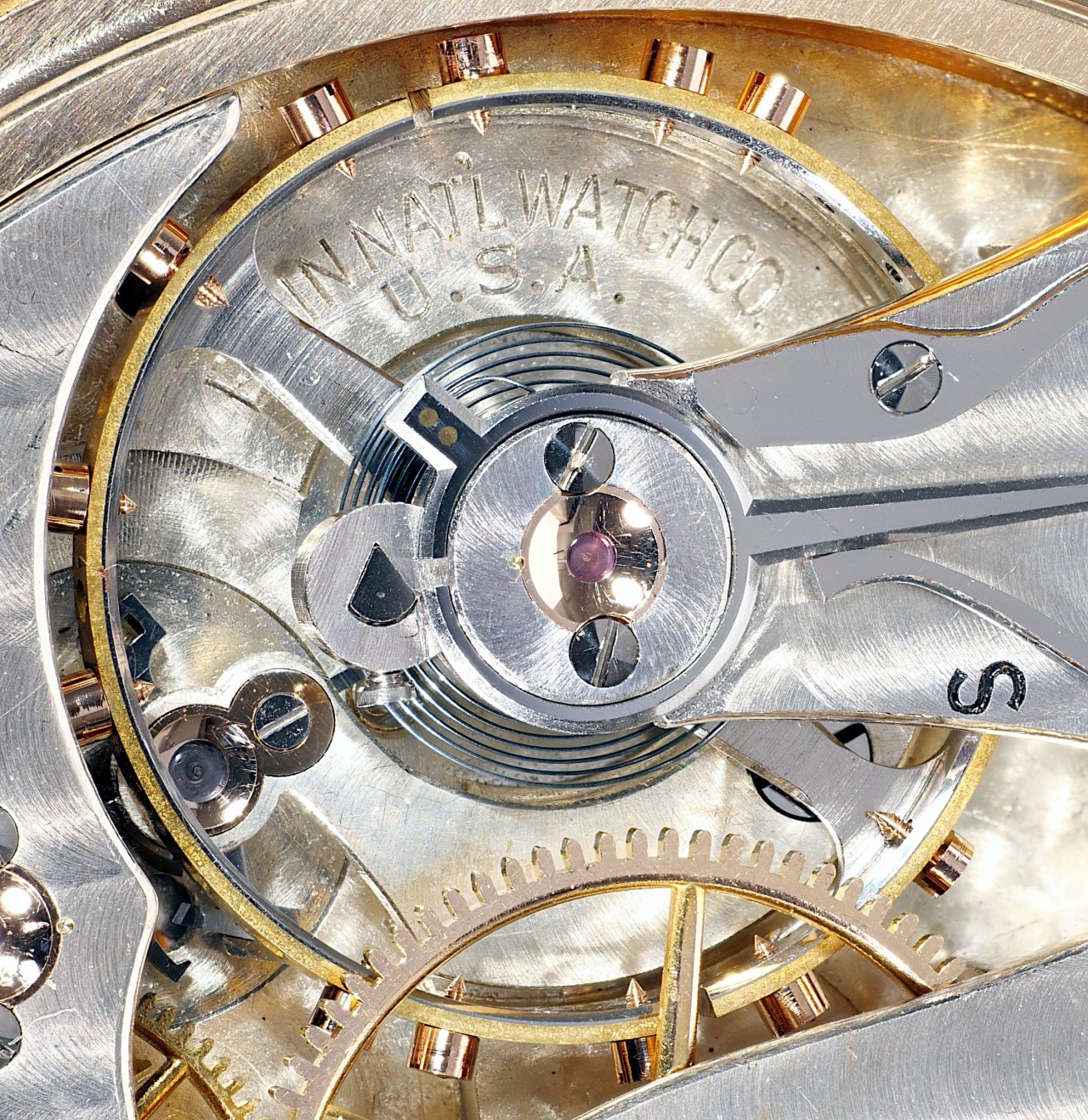
Guillaume balance: Click image to enlarge
A statement that sounds self contradictory or paradoxical is that “Invar balances contain no Invar”. But it's true, and here is the explanation.
Watches like the one shown in the photos here were introduced by the Elgin National Watch Company of Elgin, Illinois, in 1923 under the name “B. W. Raymond”. Benjamin W. Raymond was the Elgin National Watch Company’s first president. These watches were aimed at railway workers and have the features expected in a Railroad Grade watch, with a clear and easy to read dial and lever setting to avoid accidentally changing the time.
The movement is very high quality. It is a 16-size Elgin model 15 with 21 jewels, a fine adjustment Ball type regulator and a special type of compensation balance. The photo of the face of the watch shows within the seconds track that Elgin called this an “Invar Balance”.
The second photo is a close up of the balance. It has a cut bimetallic rim with brass on the outside and a silvery coloured metal on the inside. This metal is a nickel-steel alloy, but it is not Invar. Invar is strictly the name used for the nickel steel alloy with the lowest rate of thermal expansion, which has around 36% nickel.
The nickel steel alloy used in this balance has a different ratio of nickel to steel, around 42%, and a coefficient of thermal expansion of about \(7 \times 10^{-6}\), much greater than Invar. It is therefore not Invar.
Unlike brass and steel compensation balances, the rims of which are cut close to the arms, the rims of this balance are cut at an angle of about 30° to the arms. This creates a long and a short section on either side of each arm. Each of these sections carries gold screws for poising the balance and adjusting the temperature compensation. In this balance, the shorter sections have two holes and carry one screw. These short sections are the sign that the balance is not an ordinary brass and steel compensation balance.
The so-called Invar balance is actually a Guillaume Integral balance, with a nickel steel alloy called Anibal as its inner layer and brass for the outer layer.
Explanation
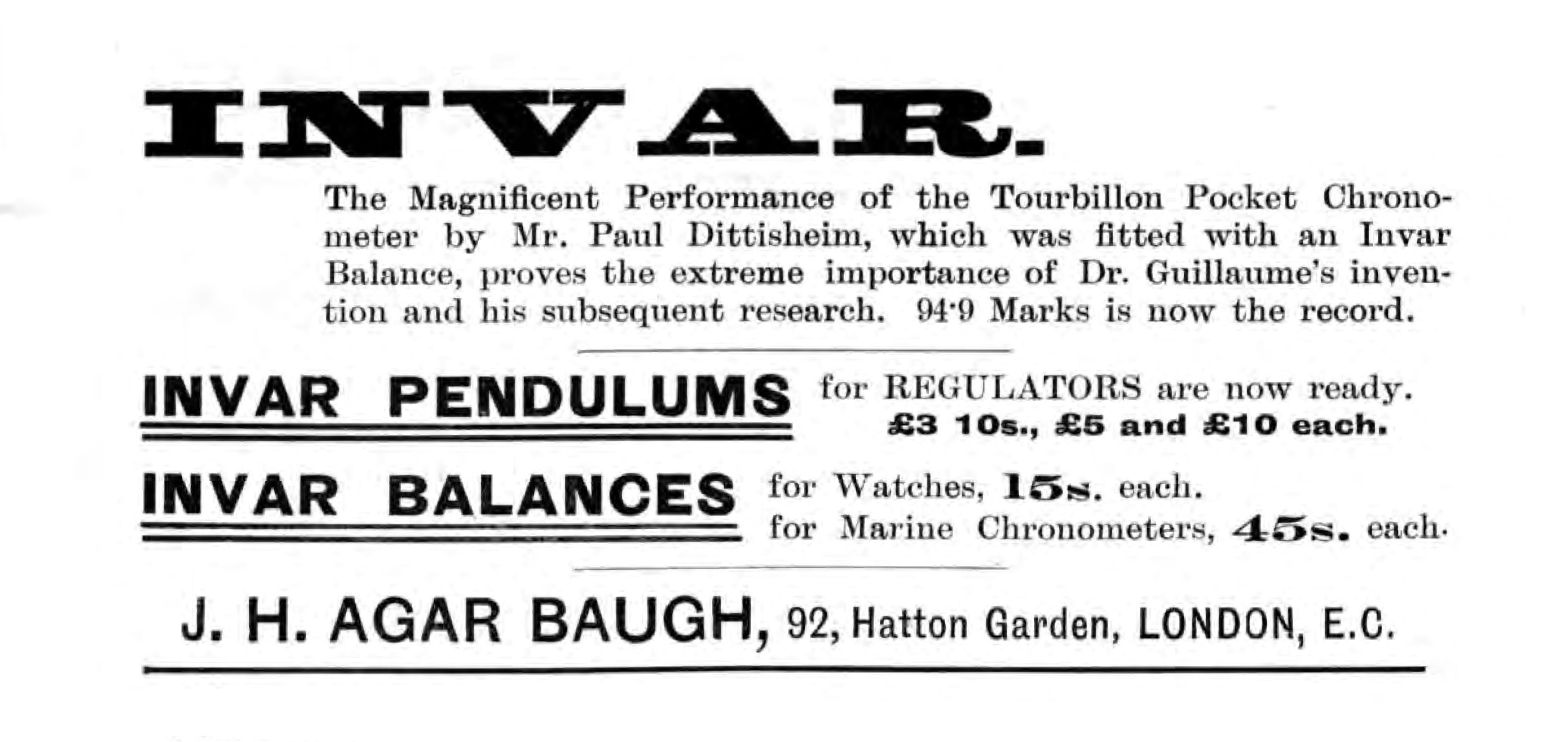
Advert from 1903 with the erroneous name ‘Invar balances’:
Click image to enlarge
Invar is a nickel-steel alloy with very low, near zero, thermal expansion, meaning that it hardly expands or contracts with changes in temperature. Invar was discovered in 1896 by Dr Charles Guillaume of the International Bureau of Weights and Measures, the BIPM, in Sèvres. It has a nickel content of nominally 36% by weight and a coefficient of thermal expansion of around \(0.8 \times 10^{-6}\) per degree Celsius, which can be further reduced by heat treatment. The name Invar was suggested by Professor Marc Thury because of its lack of thermal expansion and almost invariable dimensions. All other nickel-steel alloys have greater thermal expansion than Invar.
The use of a nickel-steel alloy in compensation balances stems from the problem of the middle temperature error and was the result of the research at the end of the nineteenth century into nickel-steel alloys by Dr Guillaume. In 1899, Guillaume realised that one of alloys he had been studying could be used to resolve the problem of middle temperature error.
Guillaume identified a nickel steel alloy with 44% nickel that has a lower rate of thermal expansion than steel, and the unusual characteristic that its rate of expansion decreases as the temperature increases. Guillaume called this alloy ‘Anibal’, derived from acier nickel pour balanciers, or nickel steel for balances.
The decreasing rate of thermal expansion of Anibal was the key to creating a balance that eliminated the middle temperature error. It meant that the difference between the expansion of the brass outer layer of the balance and the Anibal inner layer increased as the temperature increased, causing a greater movement of the bimetallic rims. This was in the opposite direction to the increasing loss of stiffness of a steel balance spring, thus matching the compensation to the characteristics of the spring.
Various names were used for brass and Anibal compensation balances. In 1912, Guillaume was moved to write a letter to the Journal Suisse d’Horlogerie about this. He said
The balance that I described for the first time in this journal is quite generally, in French-speaking countries, designated by the name of its author [that is a balancier Guillaume or Guillaume balance]. In Hamburg, it is called Nickelstahlunruhe, an incomplete denomination, since nickel steel constitutes only a part of it, while in Kew, it is called an Invar balance, a decidedly erroneous name, Invar not entering into the composition of the balance. Ch.-Éd. Guillaume, Sèvres, 29 août 1912.
After this, it became more common to refer to the balances as ‘Guillaume balances’, although some in England continued to refer to them as Invar balances. This was most likely simply due to a lack of familiarity with them. English chronometer makers used palladium alloy balance springs which had a lower middle temperature error than steel springs and were corrosion resistant, so better for marine chronometers, and English watchmakers were not disposed to using highly priced foreign balances, whatever their name.
This is the answer to the apparently paradoxical assertion that Invar balances contain no Invar. The balances in Elgin B. W. Raymond watches marked ‘Invar Balance’ are actually Guillaume balances, with the inner layer of the rim made of Anibal.
It is not known why Elgin called them Invar balances, but it might have been after the earlier use at Kew and by some in the English trade, including the British importer of Invar and Guillaume balances, or possibly because the name Invar was well known and associated with precision metrology and timekeeping. Whether Elgin made them in-house or bought them from Switzerland is not known, but their appearance is identical to Guillaume balances made in Switzerland by .
If you have any comments or questions, please don't hesitate to get in touch via my Contact Me page.
Copyright © David Boettcher 2005 - 2026 all rights reserved. This page updated November 2025.
Back to the top of the page.